Wild Animals Unearth Million-Dollar Treasure: Archaeological Sensation from Moravia
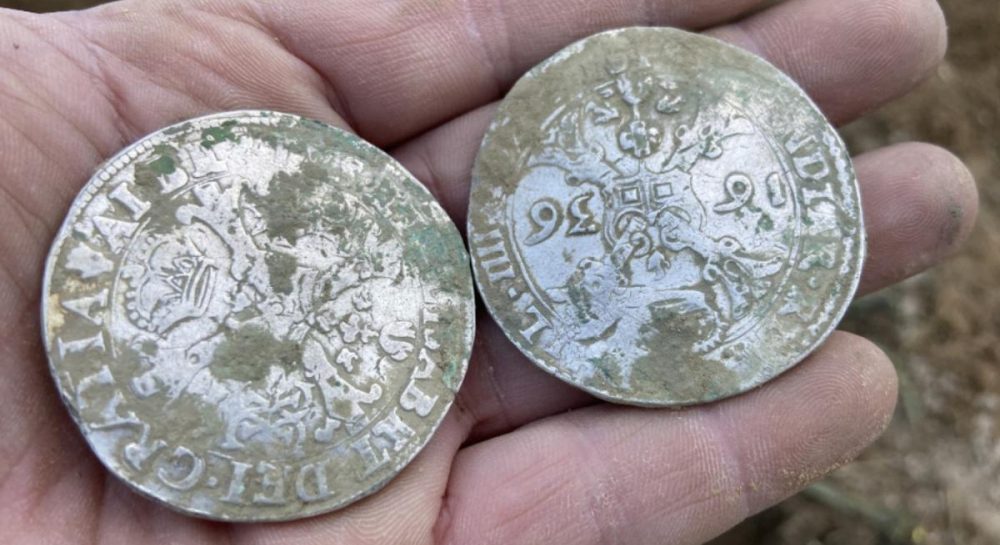
One of the largest 17th-century coin hoards was discovered in the Czech Republic after being accidentally dug up by wildlife. The find is valued at hundreds of thousands of dollars.
 🎭Culture & Sport
Photo: UNIAN
Key points
- Wild animals accidentally unearthed a treasure in a Czech meadow
- Over 7,000 gold and silver coins from the 17th century were found
- The landowner received a $25,000 reward for reporting the find
In the Czech Republic, details of an extraordinary archaeological find have been revealed, with wild animals playing a key role as "unintentional excavators." On a meadow in Moravia, forest creatures digging through the soil accidentally unearthed ancient coins. The landowner, noticing the glint of metal, did not attempt to keep the find but immediately contacted a local museum, allowing scientists to conduct professional excavations.
Archaeologists discovered one of the largest 17th-century coin hoards ever found in the region. A total of 12 gold and 7,088 silver coins were recovered from the ground, stored in two ceramic vessels at a depth of about 40 centimeters. The cultural and historical value of the collection is staggering, estimated at over 14.1 million Czech korunas, or approximately $660,000.
Geography and Origin of the Hoard
Numismatic analysis revealed an incredibly wide geographical range for the currency. Among the gold specimens, experts identified ducats from the Netherlands, German principalities, the Polish city of Gdansk, and even a Venetian gold ducat. The silver portion of the hoard consisted of coins from Bohemia, Austria, Saxony, Transylvania, and St. Gallen in Switzerland. The oldest pieces are Polish half-groschen from the 15th century, while the most recent are dated 1671, allowing historians to pinpoint the earliest possible time the treasure was hidden.
Dagmar Grossmannova, an expert from the Moravian Museum, suggests that the site served as the owner's "personal safe." According to her, the sum of 425 guilders, which the hoard represented at the time, was immense—enough to purchase about forty cows. It is likely that the owner was a wealthy merchant or a family accumulating wealth over several generations, periodically returning to the hiding spot.
This story ended positively not only for science but also for the finder. Regional authorities paid the honest citizen a reward of 560,000 korunas (about $25,000). The discovery will now become part of a museum exhibition, opening new chapters in the economic history of 17th-century Europe.
Source UNIAN — unian.ua/curiosities/skarb-iz-ponad-7-tisyach-monet-u-chehiji-yogo-… ↗
Read next
 🛡️Security
Consequences of the enemy strike on Dymer: death toll rises to nine
Rescuers continue to clear rubble in Dymer, Kyiv region, where nine people have died following a Russian attack.
 🛡️Security
Energy workers restore power in Rivne region following enemy attack
Electricity supply has been fully restored in the Sarny district of the Rivne region after being disrupted by a Russian attack on November 20.
 👥Society
Autumn Rose Care: Tips for Gardeners in the Obukhiv Region
Experts explain why it is better to wait for steady frosts before performing major pruning on roses.
 🛡️Security
Estonia affirms Ukraine's right to self-defense following incident in the Gulf of Finland
Estonian Foreign Minister Margus Tsahkna stated that the strike on a Russian vessel is a consequence of Russian aggression and reaffirmed Ukraine's right to defend itself…
 🛡️Security
Rescue operation in Dymer: 89-year-old woman pulled from rubble
In Dymer, Kyiv region, rescuers saved an elderly woman from the ruins of a building hit by a drone. The death toll from the attack has risen to nine.
 🛡️Security
Russian corvette 'Merkury' reportedly hit by Ukrainian drones in Libya
An explosion occurred on a Russian warship in Benghazi, with reports suggesting it may have been targeted by maritime drones.