Archaeological Heritage of Obukhiv Region: The Milograd Culture Links
Early Iron Age research reveals details of ancient communities that once inhabited the areas of modern Pidgirtsi, Tatsenky, and Ukrainka.
 👥Society
Photo: obukhiv.info
Key points
- The Milograd culture spanned the Prypiat and Dnieper river basins during the Early Iron Age.
- Sites in Pidgirtsi, Tatsenky, and Ukrainka represent the Pidgirtsi variant of this archaeological culture.
- Southern Milograd communities interacted with the Scythian world primarily through trade and technological exchange.
The history of the forested Dnieper region during the Early Iron Age continues to attract the attention of researchers studying antiquity. At the center of scholarly discussions remains the Milograd culture, with archaeological sites spread across modern Ukraine and Belarus. A recent analysis of archaeological sources, specifically the works of researcher Volodymyr Yeremenko, offers a fresh perspective on the geography and lifestyle of ancient tribes whose settlements once existed within the modern Obukhiv region as well.
Traces of Ancient Eras in Pidgirtsi, Tatsenky, and Ukrainka
According to scholarly generalizations, the Milograd community was not entirely homogeneous and featured several territorial variants. Among them, researchers highlight the Pidgirtsi variant, encompassing locations directly connected to our area—Pidgirtsi, Tatsenky, and Ukrainka. People of that era chose natural elevations near bodies of water and wetlands for habitation, establishing fortified hillforts and open settlements for security and subsistence.
The daily life of these ancient communities is reconstructed through finds of handmade pottery and various metal artifacts. Archaeological materials indicate active contacts between the inhabitants of the forested Dnieper region and the powerful Scythian world. However, the presence of Scythian-style arrowheads or ornaments more likely points to trade exchanges and the adoption of specific technologies rather than the mass migration of new peoples into the region.
The origins and ethnic affiliation of the Milograd culture bearers remain subjects of ongoing scholarly debate. Researchers analyze potential connections with Baltic tribes and the subsequent evolution of local communities within the Dnieper and Prypiat basins, which ultimately shaped the historical landscape of our region in antiquity.
Understanding local archaeological sites enriches the historical context of the Obukhiv region. For the members of the urban community, these ancient traces in Pidgirtsi, Tatsenky, and Ukrainka highlight the deep historical roots of the local land, which served as a crossroads of civilizations long before modern cities were established.
Source obukhiv.info — obukhiv.info/news/mizh-skifami-i-slovyanami-kim-buli-meshkantci-lisovog… ↗
Read next
 🇺🇦Ukraine
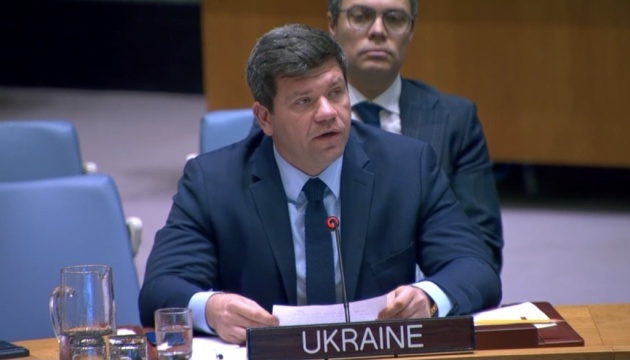
Ukraine at UN: Withdrawal demands are not a path to peace
Ukraine's Deputy Permanent Representative to the UN, Volodymyr Pavlichenko, stated that territorial concessions and troop withdrawals are not a path to a lasting peace.
 🏙️City
Artificial vs. Natural Forests: Lessons from China's Reforestation Strategy
A comprehensive study of China's 'Great Green Wall' program reveals significant differences between artificial plantations and natural ecosystems.
 🏙️City
Ukrainian manufacturers increase production of interceptors to counter jet drones
President Volodymyr Zelenskyy announced an increase in effective countermeasures against enemy jet-powered UAVs.
Kyiv prepares for its toughest winter: insights from Dutch journalists
Dutch media outlet Volkskrant analyzed the capital's winter preparations amidst ongoing attacks on the energy grid.
 🏙️City
Defense against jet drones: High Command discusses new security challenges
President Volodymyr Zelenskyy held a meeting of the Staff to discuss countering Russian jet-powered drones and strengthening air defense.
 🛡️Security
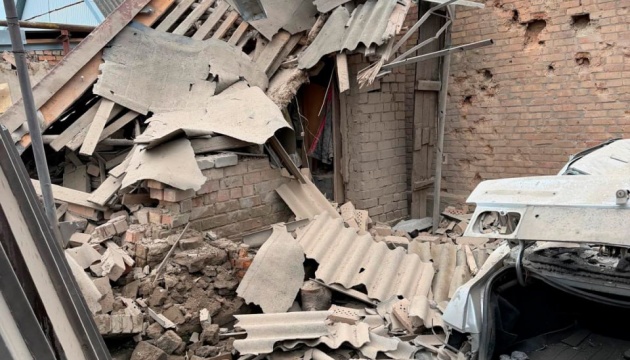
Consequences of Enemy Shelling in Dnipropetrovsk Region: Two Dead and Infrastructure Damaged
Russian forces launched 40 strikes on the Dnipropetrovsk region over the past day, resulting in casualties and damage to civilian infrastructure.