Cold War Space Legacy: How the US Copper Needle Orbit Experiment Ended
More than six decades ago, US scientists launched millions of tiny copper needles into Earth's orbit for a communication experiment. Some of this space debris still remains in orbit today.
 💡Tech
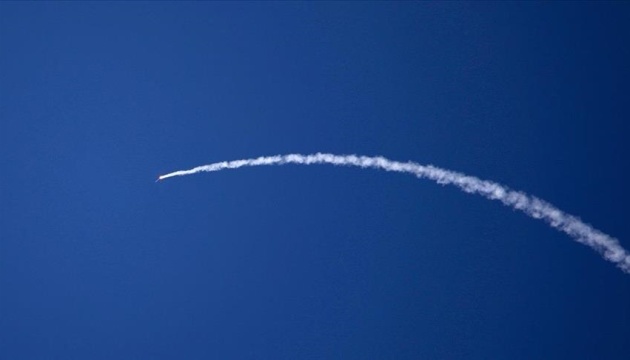
Photo: UNIAN
Key points
- 1963 experiment involved launching copper needles
- Metal elements aimed to provide military communications
- Project proved ineffective and left lingering space debris
At the height of systemic geopolitical confrontation, the United States military-industrial complex sought reliable long-distance communication methods. In 1963, a research laboratory at the Massachusetts Institute of Technology made an ambitious attempt to create an artificial ring around our planet using 480 million microscopic copper elements. Each needle, measuring less than two centimeters in length, was designed to act as a passive antenna to relay radio signals directly in outer space.
Failed Launch and Orbital Consequences
Despite thorough preparation and a 40-day process to form the so-called West Ford belt, the intended effect was never achieved. Within weeks, the density of the metal particulate dropped critically, and the rapid advancement of satellite technology ultimately proved the method obsolete. Most of the copper needles eventually re-entered the planet's atmosphere and burned up or fell to the Earth's surface between the 1970s and the 2020s.
However, the problem has not entirely disappeared. According to observers, about two dozen small objects from this historical project are still tracked in low Earth orbit. They remain extremely difficult to monitor due to their chaotic trajectories and microscopic sizes. For residents of Obukhiv and other communities, such global environmental cases serve as a reminder that space exploration leaves a lasting footprint that ultimately impacts planetary safety.
Source UNIAN — unian.ua/science/ssha-zasipali-kosmos-480-milyonami-midnih-golok-ek… ↗
Read next
Labor rights during wartime: Are employers in Obukhiv facing fines for ungranted leaves
Experts explain the nuances of granting annual leaves during martial law and potential liabilities for employers.
 🛡️Security
Large-scale Russian Attack: Over 100 Missiles and Hundreds of Drones Target Ukraine
Russian forces carried out one of the most powerful air attacks, launching about a hundred missiles of various types and hundreds of drones across Ukrainian regions.
 👥Society
Indoor Plant Care: How to Fertilize Begonias for Lush Blooms
Experts share practical advice on caring for indoor begonias, including proper fertilization techniques to stimulate vibrant and healthy blossoming at home.
 👥Society
Border violation: drone enters Moldova during massive overnight attack
During a nighttime air assault on Ukraine, another border violation incident occurred as an unidentified drone crossed into neighboring Moldova's airspace.
 ⚽Sport
Ukrainian legionnaires Malinovskyi and Batagov close to return for Trabzonspor
Ukrainian footballers playing for Turkish club Trabzonspor, Ruslan Malinovskyi and Arseniy Batagov, are in the final stages of recovery and have returned to training.
 👥Society
Embassy in Rome Comments on Inclusion of Italian MEPs in Myrotvorets Database
The Ukrainian Embassy in Italy stated that the Myrotvorets platform does not represent the official stance of the Ukrainian state following an inquiry from Rome.