Technological Dead End: Why Russia is Losing Its Strategic Aviation Potential
Russia's military-industrial complex is facing a deep crisis in the production and maintenance of strategic aircraft due to the loss of Soviet technologies and component shortages.
 🚌Transport
Photo: UNIAN
Key points
- Russian aviation's dependence on Soviet reserves
- Loss of production technologies for NK-12MP and NK-25 engines
- Logistical problems due to strikes on Taganrog and Western sanctions
Russia is showing increasing dependence on old Soviet stockpiles of aviation equipment, as the restoration of full-scale production of combat aircraft and their power plants encounters insurmountable technological barriers. As military expert Anatoliy Khrapchynskyi notes, a vast gulf lies between propagandist statements about series production and the actual state of factories, caused by the loss of unique production cycles.
Engine Problems and the Loss of the Metallurgical Base
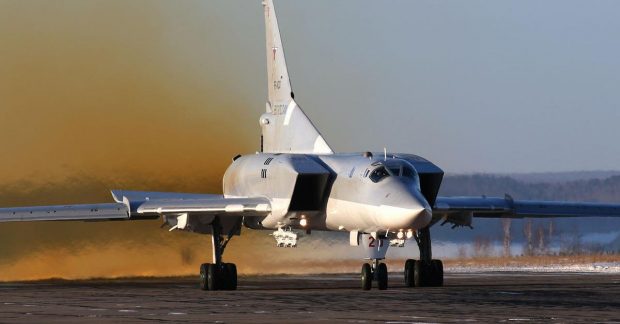
A key bottleneck remains the manufacturing of reliable aircraft engines. In particular, turboprop units NK-12MP are critically necessary for Tu-95MS strategic bombers, and NK-25 engines for supersonic Tu-22M3 bombers, the serial reproduction of which modern Russian industry is unable to secure. Soviet strategic aviation was built through the cooperation of enterprises across an entire empire with unique metallurgy and machine tools, which the Russian Federation has mostly exhausted or lost. Today, this entire aircraft fleet relies on warehouse reserves and the cannibalization of older airframes.
“Russians critically need cruise missile carriers and heavy supersonic weapons — they would rivet them in three shifts if they could,” the specialist emphasizes.
The situation with Tu-160M aircraft in Kazan demonstrates even greater complexity: finishing individual airframe backlogs and creating complex titanium elements from scratch in vacuum chambers are tasks of entirely different levels. At the same time, repair logistics suffered devastating blows due to damage to the infrastructure of the Taganrog Aviation Complex and sanctions restrictions on microelectronics supplies, which finally halted the newest flying radar projects and exhausts the resource of existing airframes.
Source UNIAN — unian.ua/weapons/rosiya-maye-obmezheni-mozhlivosti-vidnovlyuvati-st… ↗
Read next
 🎓Education
Quality of EU Reform Preparation: Why Expert Frameworks Do Not Always Translate into Working Tools
The new European Commission report on Ukraine highlights systemic issues in reform implementation, where adopted laws often lack realistic enforcement mechanisms.
 🎓Education
Autumn Planting: How to Properly Prepare Winter Onions and Garlic for Cold Weather
Ukrainian agronomists share expert recommendations on protecting winter crops from frost using proper mulching techniques.
 🧠AI Analysis
Hryvnia Strengthens at the Start of the Week: Current Exchange Rates in Obukhiv and Ukraine
On Monday, November 23, the Ukrainian currency showed a strengthening trend, leading to a decrease in the value of the dollar and euro in banks and exchange offices.
 🛡️Security
Consequences of the enemy strike on Dymer: death toll rises to nine
Rescuers continue to clear rubble in Dymer, Kyiv region, where nine people have died following a Russian attack.
 🛡️Security
Energy workers restore power in Rivne region following enemy attack
Electricity supply has been fully restored in the Sarny district of the Rivne region after being disrupted by a Russian attack on November 20.
 👥Society
Autumn Rose Care: Tips for Gardeners in the Obukhiv Region
Experts explain why it is better to wait for steady frosts before performing major pruning on roses.