Fusion Energy in Space: New Prospects for Power Supply
Scientists are exploring the possibility of placing fusion reactors in orbit to power future space missions.
 💡Tech
Photo: RBC-Ukraine
Key points
- Placing tokamaks in orbit
- Microgravity benefits for reactors
- Alternative to nuclear fission
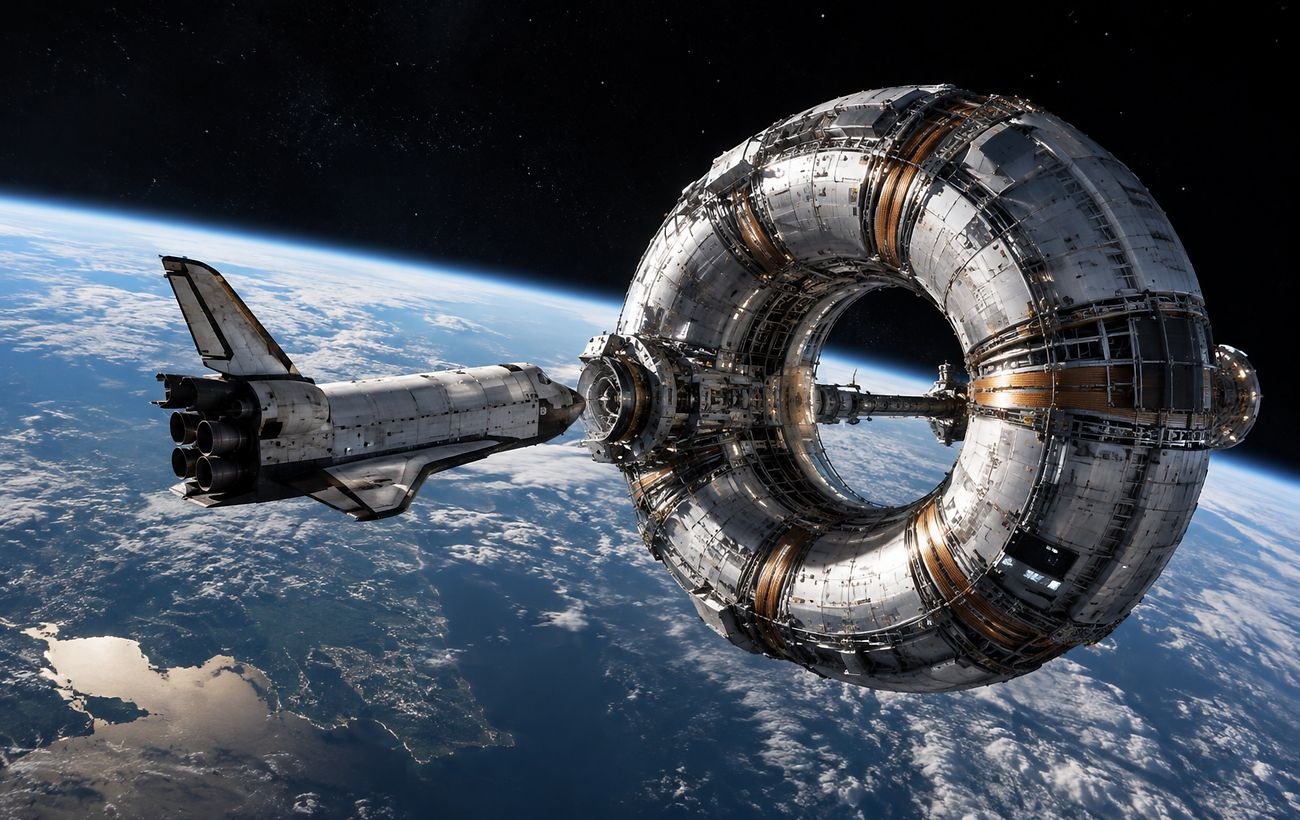
Modern research in fusion energy is increasingly moving beyond terrestrial laboratories. Scientists propose placing tokamak-type reactors directly into geostationary orbit, which would solve several engineering challenges faced by developers on Earth.
Benefits of Orbital Deployment
Physicist Yang Bae from the Spacefaring Research Institute notes that the conditions of outer space create unique opportunities for reactor operation. Specifically, microgravity significantly reduces mechanical stress on structures, while the lack of atmospheric pressure allows for much lighter vacuum chambers.
- Efficient cooling: Excess heat can be dissipated through special radiating panels.
- Scalability: A 1 GW design tokamak could provide power to a million households or large industrial facilities.
An alternative approach involves using lasers to initiate the reaction, which is also seen as a promising way to power bases on the Moon or in deep space, replacing less efficient solar panels and hazardous fission reactors.
Source RBC-Ukraine — rbc.ua/ukr/news/termoyaderni-reaktori-hochut-vidpraviti-kosmos-1795… ↗
Read next
 🚨Events
Tragedy in Dymer: 79-Year-Old Woman Dies in Hospital Following Enemy Attack
An elderly woman rescued from the rubble of a residential building in Dymer, Kyiv Oblast, has passed away in the hospital. The death toll from the strike on the five-stor…
 👥Society
Sky News Documentary on Ukrainian National Guardsmen Wins International Emmy Award
A documentary by British broadcaster Sky News detailing the service of Ukrainian National Guard soldiers has won an award at the 54th International Emmy Awards ceremony i…
 🏛️Politics
The 'Carthage-2' Case: NABU Releases Details of Searches at SBU Major General Duka's Residence
The National Anti-Corruption Bureau has disclosed evidence of obstruction during searches involving SBU Major General Serhiy Duka.
 🇺🇦Ukraine
Ukrainian MFA Responds to Libya Regarding the Destruction of the Russian Corvette in Benghazi
The Ukrainian Foreign Ministry stated that the neutralization of the Russian warship was a legitimate act of self-defense, advising Libya to address its concerns to Mosco…
 💼Economy
Foreign Currencies Rise in Ukraine: New Exchange Rates Recorded in Banks and Exchange Offices
The cash market in Ukraine has seen another increase in US dollar and euro exchange rates. The National Bank also lowered the official value of the hryvnia.
Uncertainty Over NMT-2027: 'Parents SOS' Highlights Risks of Admission Rules Delay
Ukrainian high school graduates still lack approved rules for the National Multisubject Test in 2027, raising serious concerns among students and families.